Breathe!

Wow, another couple of months has come and gone. I’ve thought a fair bit about writing but, as is the norm, the longer it goes on, the harder it is. So, here I am….

Breathing. Something that is unconcious and super easy. In theory. It’s been a topic that’s been on my mind for quite a while now and I’ve experienced first hand how difficult it sometimes is. The times are when things are out of my control, when there’s fear, when I’m thinking too much, when I’m outside my comfort zone(s). Shallow breathing always leads to anxiety/shortness of breath and this then causes panic.

A recent example is swimming. I’ve been practicing swimming in the pool (I can see, it’s warm, it’s flat) and I’d got my breathing under control enough to swim fairly consistently. I then had to train in open water due to having my first triathlon event a couple of weeks ago. The first attempt didn’t go well, a combination of cold, murky, wavy water stopped my ability to breathe normally and I ended up panicking. A couple more attempts and it improved alot. I learnt that I couldn’t control the temperature/waves and that it was OK to be swimming through seaweed/grass. It was all about taking power back, controlling the mind. ANother day the water was calmer, I could see better and managed a proper swim.

The day of the triathlon came and I went back to square one, it was cold and I couldn’t see. I had to swim with my head above the water. I panicked again. Now, the way to overcome it is to practice, so I continue to practice in a warm, calm pool where I can see. It’s my comfort zone and the open water still has power over me. But, I’m aware and I will face my fears.

Breathing has also come up in daily life, again when there is unknowns, fears, overthinking. I’ve experienced it whilst trying yoga, that’s supposed to calm right? Not when the brain is analysing everthing. There have been a few life situations where I can feel my breathing go shallow. It really is interesting to witness/experience and then go back to what the triggers are. It would be great to breathe regardless of what was happening externally, that takes practice and bravery to push the boundaries of what is comfortable and also let go of control of external.

Flexibility and Adaptablity

I wrote this on day 3 of my trip (20th December 2020)

Flexibility and Adaptablity. It’s the key lesson from 2020.

Have a plan, of course, but accept that it may not happen. It’s been about accepting the external influences and looking at what is still possible, rather than what’s not. I was supposed to be travelling to NSW tomorrow but even when I left on Friday I knew it wasn’t likely. It threw me initially as my plans had to change, I guess there’s still a process in grief, but then it’s looking forward to other opportunities and possibilities. 

Reflection

Wow, it’s been that long since my last post!

I’ve been travelling since 18th December and have written some offline posts that I’ll upload soon but today is about reflection.

Reflection is probably the single most important thing that we (I) can do. We generally learn from looking back, what could I have done differently? Why did I do/think/say that? What could I do differently next time?

Michael Jackson’s ‘Man in the Mirror’ has some good lyrics, change starts in the mirror.

So, today, what about the last year? What would I change? What did I enjoy? How did I grow? Again, it’s a lot to process in one day. We (I) tend to focus on the things that didn’t go well, the age old ‘new years resolution’. I’ll eat healthier, I’ll drink less, I’ll….. blah, blah, blah….

What if there wasn’t that huge pressure on one day to change so much? What if we (I) could change just a little bit every day? That’s more realistic. I know that I try and do too much which is a form of self sabotage. Too much = too hard = comfort zone (same old, same old).

There’s such a pressure to ‘celebrate’ the new year, which has expectation attached, which leads to pressure, which leads to stress, which ends in disappointment.

How about one day at a time? Because tomorrow isn’t guaranteed.

Big Fish/little fish.

Big Fish/little fish.

No, not the dance moves…..

You’ll all be familiar with the sayings ‘small fish in a big pond’ or ‘big fish in a small pond’.

Well, what about ‘small fish in a small pond’ and ‘big fish in a big pond’?

I’m currently in a sunflower growing competition at work. I don’t do gardening at all, ever, but thought it would be a bit of fun. I planted my seeds in two long troughs and was excited to see them do well. They got to the point where they were competing for space, nutrients and water so I decided to buy 10 bigger pots and rehome one of the troughs. I was unaware that transplanting was risky business but all of them have adapted to their new homes and are thriving.

Now, the others are still in the one remaining trough and I treat them all equally (same position in yard and same amount of water). There is the odd occasion when I skip a day of watering and by the next day the trough sunflowers are all shrivelled and wilting. The thing is, they’re in their comfort zone, they’ve had no trauma of being ‘uprooted’ and put somewhere alien and lonely. You can see the analogy building by now I guess….

So, to the rehomed ones, everything was out of their control, they didn’t choose to move and I’m sure early on they suffered, trying to re-establish themselves in what seemed like too much space. They’re now taller and stronger than the ones they left behind! They trusted the process and had faith that things would work out.

Back to fish, as the saying goes, ‘the fish grows to the size of the tank’. This is not just true for fish, it applies to every living thing (probably!), including us humans. It’s safe to stay in the same pot your whole life, everything is familiar and you know where you are, but those that embrace change and take the risk of failure grow taller and stronger (in humans it’s not physical, it’s more mental and emotional).

So, would you rather be a small fish in a small tank or a big fish in a big tank? There is no right or wrong answer, it’s all down to personal choice.

Humbleness

Humbleness. Life is all about achievement isn’t it? Well, maybe, but it depends on how it’s publicised.

Achievement is great but I think about the people that have impacted me the most. It’s those that have achieved but not felt the need to publicise or boast. Society rewards the boasters but it turns into an addiction or drug.

I like the people that don’t mention their achievements and trust that it will come out in natural conversation. They inspire me to focus on what the other person has achieved.

It’s tricky, we (I) need validation and praise. Who are we (I) without it? The same!

Entitlement

Entitlement. What do I think I deserve? What’s my expectation?

These all lead to disappointment as what I think I deserve isn’t always what I get. I had a similar time when I moved to Australia, I had no plan and learnt to be ok with that, there was massive disappointment and I worked out it was because I had expectation and felt entitled to certain outcomes that never happened.

I’m in a similar situation and the ego is in overdrive again, taking things personally, reacting, taking offence. None of which is productive but I guess it’s a process. Allow my ego to through it’s hissy fit, reflect, think it through, calm down and then decide. Act rather than react. Go through the motions of disappointment, frustration, anger, feelings of injustice and then decide based on rational thinking.

Be the Tree

Be the Tree. Nature’s very good at this and us humans could learn alot from observing.

It seems like it’s been windy forever so here’s another ‘wind’ post. There are similarities to my last post and it’s around not resisting, adapting and being flexible.

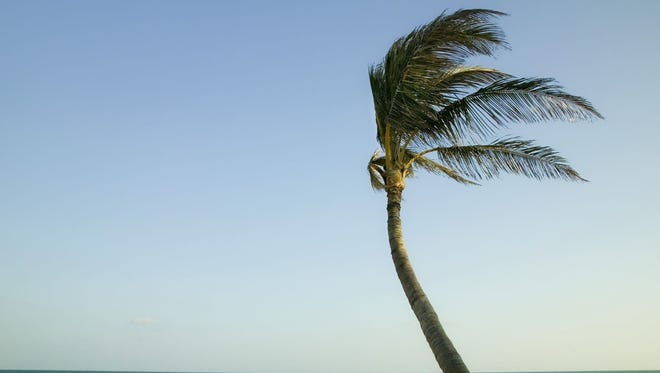
On a recent drive I was blown away (pun intended) by the strong winds that were battering the trees and the amount of flexibility that the trees were showing. It was a great life analogy, go with the wind, be flexible, adapt, and accept that it’s temporary. If trees resisted the wind they would fall down, as humans, if we resist a ‘challenge’ then we fall down.

There is also the importance of having strong roots (whatever form that may take) and being well nourished.

So, a new quote, ‘In a storm, be the Tree’.

Headwind

No one likes a headwind, here’s my story….

I’ve recently gotten into kayaking and I’m loving the freedom and different views of my environment. I also cycle and tend to avoid days where there is a wind, cycling against a headwind isn’t pleasant. But there’s worse, paddling against a headwind!

So, I decided to take the kayak to a nearby river as the sea was a bit too choppy for my liking. I decided to head one way, which happened to have the wind at my back (it didn’t seem that strong) and I happily crusied 4km with very little effort (around 11min/km). It was at turnaround point that reality hit!! Return kms were aroun 15-18min.

To get through the challenge of getting back to the starting point I had to draw parallels to life, so here they are:

Appreciate the tailwinds when you have them, there’s no resistance and life is plain sailing.

Accept that some things you can’t change.

Accept and take responsibility for decisions you make

Enjoy the challenge, it’s the headwinds that make you stronger

It’s OK to rest, but only when it’s safe to (i.e. by the bank/sheltered and not being blown backwards).

To move forward you have to work harder than the wind that’s blowing. Going into victim mode and saying ‘this is too hard’ helps not one bit.

When things are tough technique matters, when I’m cruising there’s no great strain on either arm. When working hard, using both arms (push/pull) is essential so to not tire both arms by just pulling.

Sometimes you have to go further than the optimum/shortest path. On the outward trip I took the ‘racing line’ between bends. On the way back I had to cut across the river to use the banks for some shelter. So, whilst it was harder as I was going directly against the wind, it gave me respite when I reached the sheltered bank and could paddle towards the next bend.

Sometimes you have to stop to empty the boat. Paddling hard against the waves/wind means waves break and water gets in, this makes it more uncomfortable if you’re having to sit in cold water. Stop, take time to reset.

Be grateful for the challenge, knowing that when it’s done you will be stronger.

Know that it’s temporary pain.

Don’t worry about 4km of headwind, it’s overwhelming. Even each bend was too far to focus on. Know that by each stroke you’re moving forward, it doesn’t matter how slowly.

Accept that effort doesn’t always equal reward. At times it was like running on a treadmill, lots of effort and no progress.

Smile

Wow, that was a powerful exercise!!

Possibilities

Possibilities. I’m talking about our mental capacity, stats talk about us using only 10-15% of our brain. Now, I’d say that we are actually using a lot more than this unconsciously, it can’t just be spare capacity, every part of us was built for a purpose.

I watched an interesting film called ‘Lucy’ that was about ‘unlocking’ the rest of the brain. I always thought that would be good but the film raised some interesting points. In actual fact, I think we’d be overwhelmed with the information/senses if we used more. It goes back to protection, the brain gives us enough to survive without overwhelming us.

Wouldn’t it be great to tap into certain ‘useful’ areas though? I guess that’s where mediums comes in, how people can solve amazing problems, how artists can create such beauty. We can’t all be born equal, we’re all unique, but I do wonder how to unlock these areas. I know it’s not through school, it’s more about getting in touch with self, letting go, being open to possibilities, exploring, accepting.

Resettlement

Resettlement. It was a term I was used to when I worked with the military. They were so used to being told what to do and when to do it that they had to go on resettlement courses to prepare them for civvy life.

It feels as though we, as a society, need something similar. We’ve gotten used to being controlled, unable to make decisions without fear of reprisals, so going back into society will be tough. I sense and personally feel a social anxiety, I want to be social but I don’t know how.